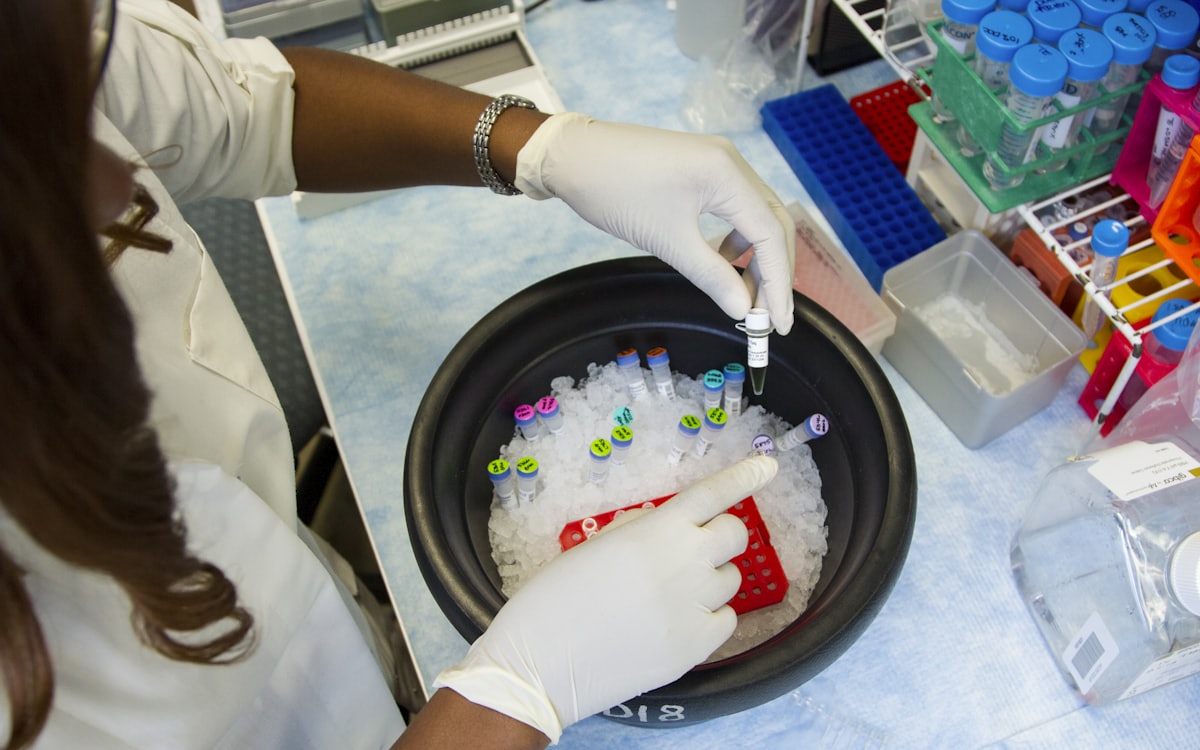
From Vial to Dose: Why Peptide Results Depend on Both Source and Math
Anyone who works with research peptides learns the same lesson eventually: a result is only as trustworthy as the two least glamorous steps behind it. The first is what arrives in the vial — its purity, identity and concentration. The second is what happens at the bench — how that powder is reconstituted and how precisely a dose is drawn. Get either one wrong and the cleanest experiment in the world produces numbers you cannot rely on. At InjectBuddy we build the free tools that handle the second half of that equation, so we spend a lot of time thinking about how the two halves fit together.
This piece is about that join — the handoff between sourcing a compound and actually using it correctly. It is written for researchers, coaches and careful self-managers who want their peptide work to be reproducible rather than approximate, and it assumes the obvious: that none of this is medical advice, and that anything injected into a body is a decision for a qualified clinician.
Purity is the variable you cannot fix later
Every other source of error in peptide work can, in principle, be corrected. You can re-do the math, re-measure the water, re-draw the syringe. The one thing you cannot fix after the fact is a vial that was never what the label claimed. If a compound is 80% pure when you assumed 98%, no calculator on earth will save the result — every dose you draw is quietly wrong by a fifth, and you will spend weeks blaming your protocol for a problem that started at purchase.
This is why independent verification matters so much more than marketing copy. A supplier that sends each batch to a third-party laboratory for HPLC purity analysis and mass-spec identity confirmation — and then hands you the batch-specific Certificate of Analysis to prove it — is removing the one variable you have no way of checking yourself. UK researchers who want that level of traceability increasingly buy peptides UK-stocked from established suppliers precisely because COA-backed sourcing turns an unknowable into a known.
What a Certificate of Analysis actually tells you
A COA is easy to dismiss as paperwork until you understand what it underwrites in your own calculations. The molecular weight on that certificate is the number you feed into any concentration math. The stated purity is the assumption baked into every dose. The identity confirmation is what tells you the powder is the peptide you think it is and not a close cousin. When those three figures are independently verified per batch rather than copied from a generic template, the arithmetic you do downstream inherits that reliability. When they are guessed, your precision is theatre.
The practical test of a supplier is whether the documentation is lot-specific. A certificate that covers many batches at once is a red flag; one that matches the exact vial in your hand is the thing worth paying for. If you want a plain-English primer on the terms that show up on these documents, our peptide concentration guide and explainer on what a peptide vial actually contains cover the vocabulary without the jargon.
Reconstitution is where good compounds get wasted
Here is the uncomfortable part: most peptide errors do not happen at the supplier. They happen at the kitchen table, in the gap between a sealed vial and a loaded syringe. Reconstitution — adding the right volume of bacteriostatic water to a lyophilised powder — is conceptually simple and surprisingly easy to get wrong under real conditions. Add 1 ml instead of 2 ml and every subsequent dose is double what you intended. Misread an insulin syringe's unit markings and the error compounds again.
This is the exact problem our peptide reconstitution calculator exists to remove. You enter the amount of peptide in the vial, the volume of water you plan to add and your target dose, and it returns the concentration and the precise number of units to draw — instantly, in the browser, with nothing stored. Pair a COA-verified compound with a reconstitution number you did not have to do in your head, and you have closed the two biggest gaps in the whole workflow at once. If you are new to the concept entirely, start with what peptide reconstitution means before you touch a vial.
Different compounds, different care
Not every peptide behaves the same way, and the popular research compounds each carry their own reconstitution quirks. Recovery-focused compounds like BPC-157 and TB-500 are frequently run together, which introduces blend math that trips people up — two peptides in one vial means two concentrations to track. We built the BPC-157 calculator and a dedicated BPC-157 and TB-500 blend calculator for exactly this case, so the dosing stays honest even when the vial holds more than one compound. The matching BPC-157/TB-500 blend guide walks through why the order of operations matters.
The broader point is that sourcing and dosing are not separable concerns. A supplier that stocks a deep catalogue of verified compounds — from BPC-157 and TB-500 to IGF-1 LR3, Ipamorelin and the rest — only earns its keep if the researcher then handles each one with the right reconstitution approach. The quality of the powder and the quality of the math are multiplied together, not added.
Storage is the silent third factor
Purity at purchase and precision at the bench still leave one gap: what happens to the compound between doses. Peptides are fragile. Reconstituted vials degrade with heat, light and time, and a compound that was 98% pure on arrival can lose potency in a warm drawer long before the labelled discard date. This is why cold-chain handling from the supplier and sensible storage afterwards both matter — the certificate describes the powder on the day it was tested, not the day you draw your last dose. Our peptide storage and stability guide covers how long reconstituted compounds realistically last and what shortens their life.
Why we keep the tools free
People sometimes ask why a calculator suite gives all of this away. The answer is the same reason a good supplier publishes its COAs: in a field where mistakes carry real consequences, trust is the entire product. We keep every calculation in the browser so no health data is stored, we put a blunt disclaimer on every page that we are a maths tool and not a medical service, and we would rather omit a figure we cannot stand behind than print one we cannot. That posture is not charity — it is the only version of this that deserves to exist.
The same logic is why we are happy to point researchers toward suppliers who hold themselves to the equivalent standard. If you are going to buy peptides UK-side for a study, the supplier should be doing on the sourcing end exactly what a good calculator does on the dosing end: removing guesswork, documenting everything, and letting you verify rather than trust. When both halves operate that way, your results stop depending on luck.
A simple workflow that holds up
Strip it all down and the reliable peptide workflow is short. Buy from a source that proves purity and identity per batch with independent testing. Keep the cold chain intact and store the compound sensibly once it arrives. Reconstitute with a calculator rather than mental arithmetic, so the concentration and unit count are exact. Match the method to the specific compound, especially with blends. And re-check the math whenever anything changes — a new vial, a new water volume, a new target dose. None of it is complicated; all of it is easy to skip when you are in a hurry, which is precisely when errors arrive.
For the dosing half of that workflow, our reconstitution calculator and the wider guides library are free, permanent and require no login. For the sourcing half, insist on the same rigour you would demand of your own measurements. Verified at the source, precise at the bench, sensible in between — that is the whole game, and the researchers who respect all three are the ones whose results other people can actually reproduce.